Introduction
In recent years, trading in the stock market has become increasingly popular in India. With the growth of digital trading platforms and mobile applications, many people are entering the world of stock trading. Alongside legal trading systems, another form of trading has also gained attention—Dabba Trading.
Dabba Trading is an unofficial and illegal form of stock market trading where transactions occur outside the regulated stock exchanges. Many beginners hear about Dabba Trading IDs and become curious about how they work and whether they can earn money through them.
In this article, we will provide a complete beginner guide on Dabba Trading ID, explain how it works, how traders use it, its advantages and disadvantages, and the risks involved. If you are new to trading and want to understand this concept, this guide will help you learn everything step by step.
What is Dabba Trading?
Dabba Trading refers to a system where stock market trades are conducted outside the official stock exchanges such as NSE and BSE.
In this type of trading, transactions are handled by local brokers or operators instead of registered stock exchanges. These brokers provide traders with a Dabba Trading ID, which allows them to place trades through a private system or software.
However, the most important thing to understand is that Dabba Trading is illegal in India because it bypasses the regulations of the Securities and Exchange Board of India (SEBI).
Despite this, some traders still participate in it because of high leverage and fewer formal requirements.
What is a Dabba Trading ID?
A Dabba Trading ID is an account provided by an unofficial broker that allows traders to place trades in the stock market without using a registered brokerage platform.
Unlike a Demat account, a Dabba Trading ID does not involve real transactions in the stock exchange. Instead, trades are recorded internally by the broker.
Key characteristics of a Dabba Trading ID include:
- It is issued by an unregistered broker.
- Trades do not actually go to the stock exchange.
- Profits and losses are settled privately.
- Payments are often made in cash.
This type of trading system operates in parallel with the real stock market but remains outside regulatory supervision.
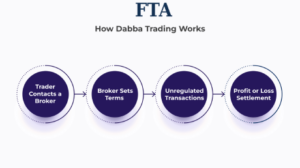
How Dabba Trading Works
To understand Dabba Trading properly, it is important to know how the system functions.
Step 1: Contacting a Broker
A trader first connects with a local dabba trading broker. These brokers operate privately and provide trading IDs to clients.
Step 2: Getting a Trading ID
The broker provides a login ID and password for a trading platform or software where the trader can place orders.
Step 3: Placing Trades
The trader can place buy or sell orders based on real market prices. However, these trades are not executed in the actual stock exchange.
Step 4: Profit and Loss Calculation
The broker calculates profits or losses based on market movement. If the trader earns profit, the broker pays the amount. If there is a loss, the trader pays the broker.
Step 5: Settlement
Most settlements occur in cash or through private transfers rather than official banking channels.
Why Some Traders Use Dabba Trading
Despite the risks, some traders prefer Dabba Trading due to certain reasons.
1. High Leverage
Dabba brokers often provide extremely high leverage, sometimes 20x to 100x, which allows traders to trade larger amounts with a small capital.
2. No Documentation
Unlike legal trading accounts, dabba trading usually requires very little documentation.
3. No Taxes
Many participants believe they can avoid taxes since the transactions are unofficial.
4. Quick Account Setup
A Dabba Trading ID can often be created within minutes.
However, these benefits come with serious legal and financial risks.
How to Trade Using a Dabba Trading ID (Step-by-Step)
Below is the general process traders follow when using a Dabba Trading ID.
Step 1: Deposit Funds
The trader deposits funds with the broker. This amount is used as trading capital.
Step 2: Login to the Trading Platform
The broker provides login credentials for the trading software where traders can access market prices.
Step 3: Select the Asset
Traders choose what they want to trade:
- Stocks
- Indices
- Commodities
- Currency pairs
Step 4: Place Buy or Sell Orders
Traders place orders similar to regular trading platforms.
Step 5: Monitor Market Movements
Traders watch the market closely to decide when to exit the trade.
Step 6: Close the Trade
Once the trader closes the position, profit or loss is calculated.
Advantages of Dabba Trading
Some traders see certain benefits in this system.
Lower Transaction Costs
There are usually fewer brokerage charges compared to official trading platforms.
Flexible Trading Conditions
Traders may receive more flexible leverage and trading limits.
Privacy
Some traders prefer the privacy offered by informal trading systems.
However, these advantages do not outweigh the risks involved.
Risks of Dabba Trading
Dabba Trading comes with significant dangers that every trader should understand.
Legal Risk
Dabba Trading is illegal in India under the Securities Contracts Regulation Act.
Authorities may impose penalties or legal action against participants.
Fraud Risk
Because the system is unregulated, brokers may manipulate trades or refuse payouts.
No Investor Protection
Unlike regulated markets, traders do not receive protection from financial regulators.
Lack of Transparency
Trades are not recorded on official exchanges, which creates a high risk of manipulation.
Is Dabba Trading Legal in India?
No, Dabba Trading is completely illegal in India.
The Securities and Exchange Board of India (SEBI) strictly prohibits this type of trading.
Participating in dabba trading may lead to:
- Heavy penalties
- Legal action
- Criminal charges in serious cases
Therefore, traders are strongly advised to use legal and regulated trading platforms.
Difference Between Dabba Trading and Legal Trading
| Feature | Dabba Trading | Legal Trading |
|---|---|---|
| Regulation | Unregulated | Regulated by SEBI |
| Transparency | Low | High |
| Risk | Very High | Controlled |
| Investor Protection | None | Available |
| Legality | Illegal | Legal |
This comparison clearly shows why regulated trading is the safer option.
Safer Alternatives to Dabba Trading
If you want to trade safely, consider these legal options.
1. Open a Demat Account
A Demat account allows you to hold stocks electronically and trade through official exchanges.
2. Use Registered Brokers
Choose SEBI-registered brokers for safe trading.
3. Learn Stock Market Basics
Education is essential before investing money.
4. Start with Small Capital
Begin trading with a small amount until you gain experience.
Tips for Beginner Traders
If you are new to trading, follow these tips:
- Learn technical and fundamental analysis.
- Avoid high-risk trading methods.
- Use proper risk management.
- Never invest money you cannot afford to lose.
- Choose regulated platforms only.
These practices can help you build a safer trading journey.
Conclusion
Dabba Trading ID may appear attractive to some traders because of high leverage, low documentation, and quick setup. However, it is important to understand that dabba trading operates outside the legal financial system and carries serious risks.
Since the system is unregulated, traders face the possibility of fraud, legal consequences, and financial loss. For beginners who want to build a sustainable trading career, the best option is always to use legal trading platforms regulated by financial authorities.
By learning proper trading strategies, using trusted brokers, and practicing disciplined investing, traders can participate in the stock market safely and responsibly.
FAQs
1. What is a Dabba Trading ID?
A Dabba Trading ID is an unofficial trading account provided by private brokers for trading outside regulated stock exchanges.
2. Is Dabba Trading legal in India?
No, dabba trading is illegal and prohibited by financial regulators.
3. Can traders make money with dabba trading?
Some traders claim profits, but the risks of fraud and legal issues are extremely high.
4. What is the safest way to start trading?
The safest way is to open a Demat account with a SEBI-registered broker.
5. Why do people still use dabba trading?
Some traders are attracted by high leverage, privacy, and quick account setup.