Introduction
Online Dabba Trading is a term that has gained significant attention in recent years, especially among retail traders looking for quick profits in the stock market. Many investors are attracted to it because of promises like zero brokerage, high leverage, no taxes, and instant profits. However, what most people don’t realize is that online dabba trading is illegal in India and can lead to heavy financial losses and legal consequences.
In this detailed guide, we will explain:
- What online dabba trading is
- How it works step-by-step
- Why it is illegal
- Risks involved
- Legal consequences under Indian law
- How it differs from legal trading
- Safer alternatives for traders
If you are planning to invest in the stock market, this article will help you understand the complete reality behind online dabba trading.
What is Online Dabba Trading?
Online Dabba Trading is an illegal form of stock market trading where transactions are conducted outside official stock exchanges like the National Stock Exchange (NSE) and Bombay Stock Exchange (BSE).
The word “Dabba” means “box” in Hindi. In this context, it refers to keeping trade records in a private register (or software) rather than executing them on official stock exchanges.
In simple terms:
- You place a trade.
- The broker records it internally.
- The trade never reaches the real stock exchange.
- Profits and losses are settled in cash or through unofficial channels.
This entire system operates outside the supervision of the Securities and Exchange Board of India (SEBI).
Why is Online Dabba Trading Illegal?
Online Dabba Trading is illegal because:
- Trades are not executed on recognized stock exchanges.
- Taxes like Securities Transaction Tax (STT) are not paid.
- It violates SEBI regulations.
- It often involves tax evasion and black money transactions.
Under the Securities Contracts (Regulation) Act, 1956, trading outside recognized exchanges is a punishable offense.
Penalties may include:
- Heavy fines
- Imprisonment
- Asset seizure
- Permanent trading bans
How Online Dabba Trading Works – Step-by-Step Explanation
Now let’s understand the complete process step-by-step.
Step 1: Client Contacts an Unofficial Broker
The process begins when a trader connects with a local or online unauthorized broker.
These brokers often advertise:
- High leverage (10x to 100x)
- Zero paperwork
- No KYC
- No tax
- Fast account activation
Unlike legal brokers registered with SEBI, these brokers operate privately.
Step 2: Informal Account Opening
In legal trading, you need:
- PAN card
- Aadhaar
- Bank verification
- KYC compliance
In online dabba trading:
- Minimal documentation
- Sometimes only phone number
- Cash deposit accepted
- No official demat account
The broker creates an internal trading ID in their own system.
Step 3: Trading Platform Access
The broker provides:
- A private trading app
- Web-based software
- WhatsApp-based trading instructions
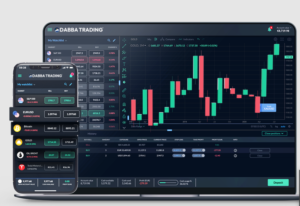
The interface may look like a real stock market platform. Prices are often linked to NSE/BSE live feeds, but trades are NOT executed on actual exchanges.
Step 4: Trade Execution (Only on Paper)
When the trader places a buy or sell order:
- The broker records the trade in his internal system.
- No order is sent to NSE or BSE.
- It is merely an entry in a private ledger.
Example:
You “buy” 100 shares of XYZ at ₹500.
In reality:
- No shares are purchased.
- The broker just records the transaction.
Step 5: Profit & Loss Settlement
At the end of the day:
If you make a profit:
- Broker pays you in cash or bank transfer.
If you incur a loss:
- You pay the broker.
There is no official contract note.
No official transaction record.
No legal proof.
Step 6: Broker Risk Management (Internal Hedging)
Sometimes brokers:
- Hedge positions in real market to manage risk.
- Or simply take the opposite position against clients.
In many cases, brokers hope most traders lose money, so they don’t need to hedge at all.
This creates a major conflict of interest.
Why Traders Are Attracted to Online Dabba Trading
Despite being illegal, many traders get attracted because:
1. High Leverage
Leverage up to 50x or 100x.
2. No Taxes
No GST, no STT, no capital gains tax (officially).
3. No Documentation
Easy entry.
4. Quick Settlement
Instant cash-based settlement.
5. Speculation Freedom
No margin restrictions like legal exchanges.
Major Risks of Online Dabba Trading
1. No Legal Protection
If broker disappears:
- No complaint mechanism
- No SEBI support
- No investor protection
2. Fraud & Manipulation
Broker can:
- Manipulate prices
- Modify trade records
- Cancel profits
- Block withdrawals
3. Unlimited Loss Risk
High leverage means:
- Small price movement = huge loss
- Margin calls
- Debt situations
4. Legal Consequences
Participating knowingly in illegal trading can:
- Attract investigation
- Lead to fines
- Cause tax scrutiny
5. No Transparency
Everything depends on broker honesty.
Legal Trading vs Online Dabba Trading
| Feature | Legal Trading | Online Dabba Trading |
|---|---|---|
| Regulator | SEBI | None |
| Exchange Execution | Yes | No |
| Contract Notes | Yes | No |
| Tax Compliance | Yes | No |
| Investor Protection | Yes | No |
| Legality | Legal | Illegal |
Real Consequences: Government Crackdowns
Over the years, authorities have taken action against illegal trading networks across India. SEBI and enforcement agencies frequently conduct raids and freeze accounts of operators involved in dabba trading activities.
Participants are also investigated for tax evasion under Income Tax laws.
Psychological Trap of Online Dabba Trading
Many traders think:
- “I’ll make quick money.”
- “I won’t get caught.”
- “Everyone is doing it.”
But the reality:
- Most retail traders lose money.
- High leverage wipes accounts quickly.
- Brokers earn from your losses.
It becomes similar to betting rather than investing.
How to Identify Online Dabba Trading Scams
Watch out for:
- Guaranteed profit claims
- Extremely high leverage offers
- No KYC requirement
- Cash-based deposit system
- No official contract notes
- Broker not listed on SEBI website
Always verify broker registration on SEBI’s official portal.
Safe & Legal Alternatives to Dabba Trading
If you want leverage and active trading, choose legal platforms:
- SEBI-registered brokers
- Margin trading facility (MTF)
- Futures & Options (regulated)
- Intraday trading within exchange limits
Legal brokers offer:
- Transparency
- Investor grievance redressal
- Official contract notes
- Tax compliance
Impact on the Indian Economy
Dabba trading:
- Reduces tax revenue
- Increases black money circulation
- Distorts market data
- Harms genuine investors
That’s why regulators strictly oppose it.
Frequently Asked Questions (FAQ)
Is Online Dabba Trading legal in India?
No, it is completely illegal.
Can I go to jail for dabba trading?
Yes, under certain provisions of securities laws.
Why do people still do it?
Because of high leverage and tax avoidance.
Is it the same as intraday trading?
No. Intraday trading is legal when done through registered brokers.
How can I check if a broker is legal?
Check registration on SEBI’s official website.
Final Conclusion
Online Dabba Trading may look attractive due to high leverage, zero taxes, and quick profits. However, it is illegal, risky, and unsafe. There is no investor protection, no transparency, and no legal support.
Short-term greed can lead to long-term financial and legal trouble.
If you want to build sustainable wealth, always trade through SEBI-registered brokers and recognized exchanges like NSE and BSE.
Legal trading may have rules and taxes — but it also offers security, transparency, and long-term growth opportunities.