Dabba Trading Panel: How It Works – The Inside Story
In recent years, stock market participation in India has grown rapidly. With easy access to online platforms and mobile trading apps, more retail investors are entering the market than ever before. However, alongside legitimate trading platforms registered with the Securities and Exchange Board of India (SEBI), an underground system known as Dabba Trading continues to operate.
Many traders hear about “Dabba Trading Panels” promising high leverage, low brokerage, and easy profits. But few truly understand how these panels work, what risks are involved, and why they are considered illegal.
This in-depth guide explains everything you need to know about Dabba Trading Panels — their structure, operation, risks, legal implications, and how to protect yourself.
1. What Is Dabba Trading?
Dabba trading is an illegal form of trading where transactions are conducted outside recognized stock exchanges. Instead of placing orders on regulated exchanges like the Bombay Stock Exchange (BSE) or the National Stock Exchange of India (NSE), trades are recorded privately by a broker in an unofficial system.
The word “Dabba” means “box” in Hindi. Historically, brokers would write trades in a physical box or notebook rather than executing them on official exchanges. Today, this has evolved into digital software systems called Dabba Trading Panels.
In simple terms:
- No real shares are bought or sold.
- Trades are not reported to exchanges.
- Profits and losses are settled privately in cash.
- The system operates outside regulatory oversight.
2. What Is a Dabba Trading Panel?
A Dabba Trading Panel is software used by illegal brokers to simulate real-time stock market trading.
It looks similar to legitimate trading platforms. It shows:
- Live market prices
- Charts and indicators
- Buy and sell options
- Margin trading features
- Ledger and P&L reports
However, the key difference is this:
Trades placed on a Dabba panel never reach the stock exchange.
Instead, the broker internally records the trade. The trader’s profit or loss is settled directly with the broker — not through clearing corporations or banks linked to regulated exchanges.
3. How Does a Dabba Trading Panel Work?
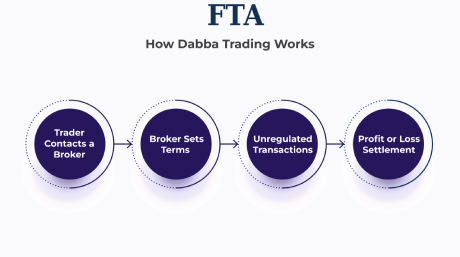
Let’s break this down step by step.
Step 1: Client Registration
A trader contacts a local agent or broker who offers Dabba trading services. No official KYC process linked to exchanges is done. Often:
- Minimal documentation is required
- PAN may or may not be taken
- Accounts are created informally
Step 2: Deposit Funds
The trader deposits money directly into:
- Broker’s personal bank account
- Cash payment
- Third-party account
- Sometimes cryptocurrency or digital wallets
No official trading account with NSE or BSE is created.
Step 3: Access to Trading Panel
The trader receives:
- Login ID and password
- Access to a web-based or desktop trading panel
- Sometimes a mobile app clone
The panel mirrors real-time data from actual exchanges but does not execute orders there.
Step 4: Placing Trades
When the trader places a buy or sell order:
- The trade is recorded internally by the broker.
- No actual shares are purchased.
- No transaction reaches exchange servers.
The system merely creates a digital record of the position.
Step 5: Profit and Loss Settlement
At the end of the day or week:
- If the trader profits, the broker pays cash.
- If the trader loses, the broker collects money.
- Everything is settled privately.
There is no official contract note, no exchange record, and no clearing corporation involvement.
4. The Business Model Behind Dabba Trading
Dabba trading operates like a betting system on market price movements.
1. Opposite Position Model
In most cases, the broker takes the opposite position of the client.
If the trader buys:
- The broker internally “sells”.
If the trader loses:
- The broker profits.
This creates a conflict of interest because the broker benefits when the trader loses.
2. High Leverage Attraction
Dabba brokers often offer:
- 10x to 100x leverage
- Very low margins
- No formal risk checks
This attracts traders looking for quick profits.
3. Tax Avoidance
Because trades are off the books:
- No Securities Transaction Tax (STT)
- No GST
- No official reporting
This allows tax evasion, which is another reason authorities treat it seriously.
5. Is Dabba Trading Legal in India?
No. Dabba trading is illegal in India.
Under regulations of the Securities and Exchange Board of India (SEBI):
- All securities trades must be routed through recognized stock exchanges.
- Off-market speculative trading is prohibited.
- Unauthorized brokers can face penalties, fines, and imprisonment.
Law enforcement agencies regularly conduct raids against illegal trading networks operating outside the NSE and BSE framework.
Participating in Dabba trading can also expose traders to legal risks.
6. Why Do Traders Still Use Dabba Panels?
Despite being illegal, Dabba trading continues due to:
1. High Leverage
Traders are attracted to very high margin limits.
2. Lower Brokerage
Fees are often lower than regulated brokers.
3. No Documentation
People avoiding tax reporting sometimes prefer it.
4. Easy Access
No strict KYC process.
However, these short-term attractions come with serious long-term risks.
7. Major Risks of Dabba Trading
1. No Legal Protection
If the broker refuses to pay profits:
- You cannot complain to SEBI.
- No exchange grievance system applies.
- No investor protection fund.
2. Fraud Risk
Since everything is controlled by the broker:
- Prices can be manipulated.
- Accounts can be altered.
- Withdrawals can be blocked.
3. Legal Consequences
Authorities can:
- Freeze bank accounts
- Investigate transactions
- Impose penalties
4. Counterparty Risk
If the broker disappears, your money is gone.
8. Difference Between Legal Trading and Dabba Trading
| Feature | Legal Trading | Dabba Trading |
|---|---|---|
| Regulated By | SEBI | No regulator |
| Exchange Involved | NSE/BSE | None |
| Contract Note | Yes | No |
| Tax Reporting | Mandatory | Avoided |
| Investor Protection | Available | None |
| Legal Status | Legal | Illegal |
9. How to Identify a Dabba Trading Panel
Warning signs include:
- No official SEBI registration number
- No exchange member code
- Cash settlements
- Unrealistic leverage
- No official contract notes
- No demat account required
Always verify broker registration on the official SEBI website.
10. Real-World Consequences
Over the years, authorities have taken action against illegal trading rackets. Raids often reveal:
- Crores of rupees in unaccounted transactions
- Parallel trading books
- Tax evasion
Both operators and participants may face scrutiny.
11. How to Stay Safe as a Trader
- Trade only with SEBI-registered brokers.
- Ensure trades reflect in your demat account.
- Verify contract notes.
- Avoid unrealistic leverage offers.
- Pay taxes properly.
- Check broker details on NSE or BSE websites.
12. Final Verdict: Should You Use a Dabba Trading Panel?
The short answer: No.
While it may seem attractive due to high leverage and lower costs, the risks far outweigh the benefits.
- No investor protection
- Legal exposure
- Fraud risk
- Zero regulatory oversight
Long-term wealth creation is only possible through regulated and transparent systems.
Conclusion
Dabba Trading Panels may look like real trading platforms, but they operate outside legal and regulatory boundaries. They simulate market activity without actually executing trades on recognized exchanges like the National Stock Exchange of India or the Bombay Stock Exchange.
Understanding how these panels work helps you avoid falling into high-risk and illegal setups. Always prioritize safety, legality, and transparency when investing your hard-earned money.
If you’re serious about trading or investing, choose regulated brokers and follow proper compliance. The market itself carries risk — there is no need to add legal and fraud risk on top of it.